
Beginner Racing Guide
Everything nobody explains at your first track day, written down in one place — with no gatekeeping and no assumed knowledge.
Motorsports has an intimidation problem. The information is scattered across forums, the terminology is dense, and too many paddocks treat a new face as an inconvenience. We think that's the single biggest thing holding the sport back.
This guide is the answer we wish somebody had given us in 2003.
Not sure where you fit yet? Start with our full guide to grassroots racing and how to get into amateur motorsports.
Step 1
Do an HPDE. Rent, don't buy. Find out if you love it before you spend real money.
Step 2
Get coached. Seat time without feedback just makes bad habits permanent.
Step 3
Pick a series. Endurance is the cheapest path to real wheel-to-wheel racing.
The order of operations
Nearly everyone who gets into racing successfully follows roughly this path.
- ◆1. Attend an HPDE in a rental or a borrowed car
- ◆2. Repeat 3–5 times, with coaching, at more than one track
- ◆3. Complete a competition licensing school or a sanctioning body's novice program
- ◆4. Run an endurance race as part of a multi-driver team
- ◆5. Decide whether to keep renting or build/buy your own car
What it actually costs
The honest answer is 'it depends,' but the ranges are knowable. An HPDE weekend in your own car might be a few hundred dollars in entry plus consumables. A rental weekend removes the surprise costs. Buying and running your own car is almost always more expensive than people budget for — the car is the cheap part, the operation is not.
We publish real numbers in our education articles rather than making you guess.
Do you need a license?
Not for HPDE. Yes for competition. Every sanctioning body — SCCA, NASA, ChampCar, WRL — has its own path, typically involving a licensing school or a number of logged HPDE days plus a signed-off novice race. We'll tell you which route fits your goals and budget.
Gear you actually need
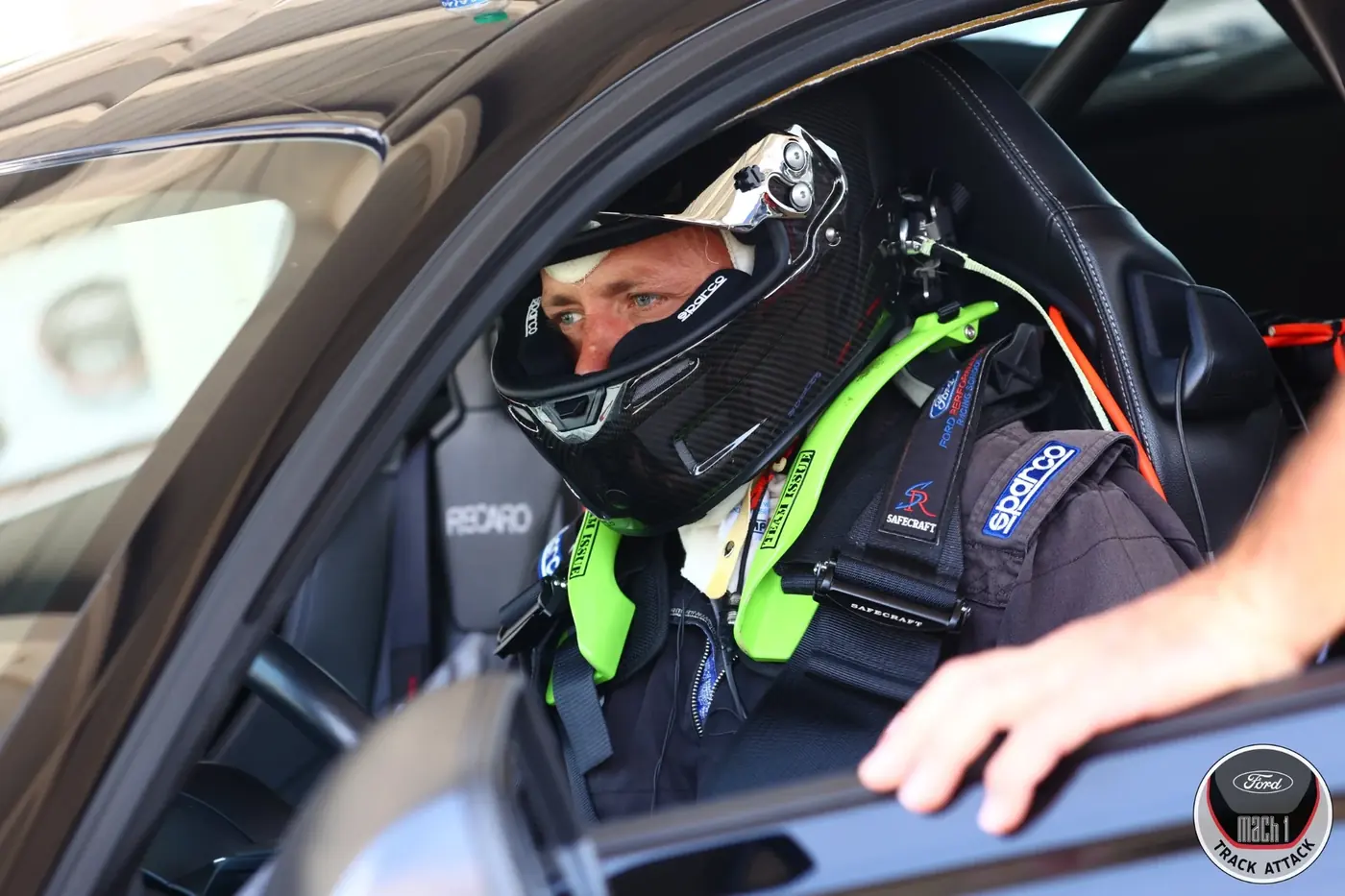
For HPDE: a current Snell-rated helmet, closed-toe shoes, long pants, a long-sleeve cotton or Nomex top at some events. For competition: an SFI-rated suit, gloves, shoes, head-and-neck restraint, and a helmet meeting your series' spec. Buy safety gear new. Everything else can be used.
Straight answers.
Am I too old to start?
No. A large share of amateur racers start in their 40s and 50s. Reaction time matters far less than consistency and judgment.
Should I buy a race car first?
Almost never. Rent for a season. You'll learn what you actually want, and you'll save money doing it.
What's the safest way to start?
In a properly caged, properly prepped car, with a coach next to you, at a novice-run-group HPDE. That's exactly what we do.
Learn the track in a car built to be learned in — with a coach in the right seat and zero risk to your daily driver.
We've built the cars. That's exactly why we can tell you what it really costs.
Data, video, right-seat coaching, and a debrief that actually changes what you do next session. Bring your car or ours.
Corner-by-corner notes, reference points, and honest opinions on the tracks we run across the Southeast.
Talk to a racer, not a call center.
Phone is the fastest way to get real answers about dates, cars, and what actually fits your goals. Prefer to type? The form works too.
Built by racers. Run by racers.