
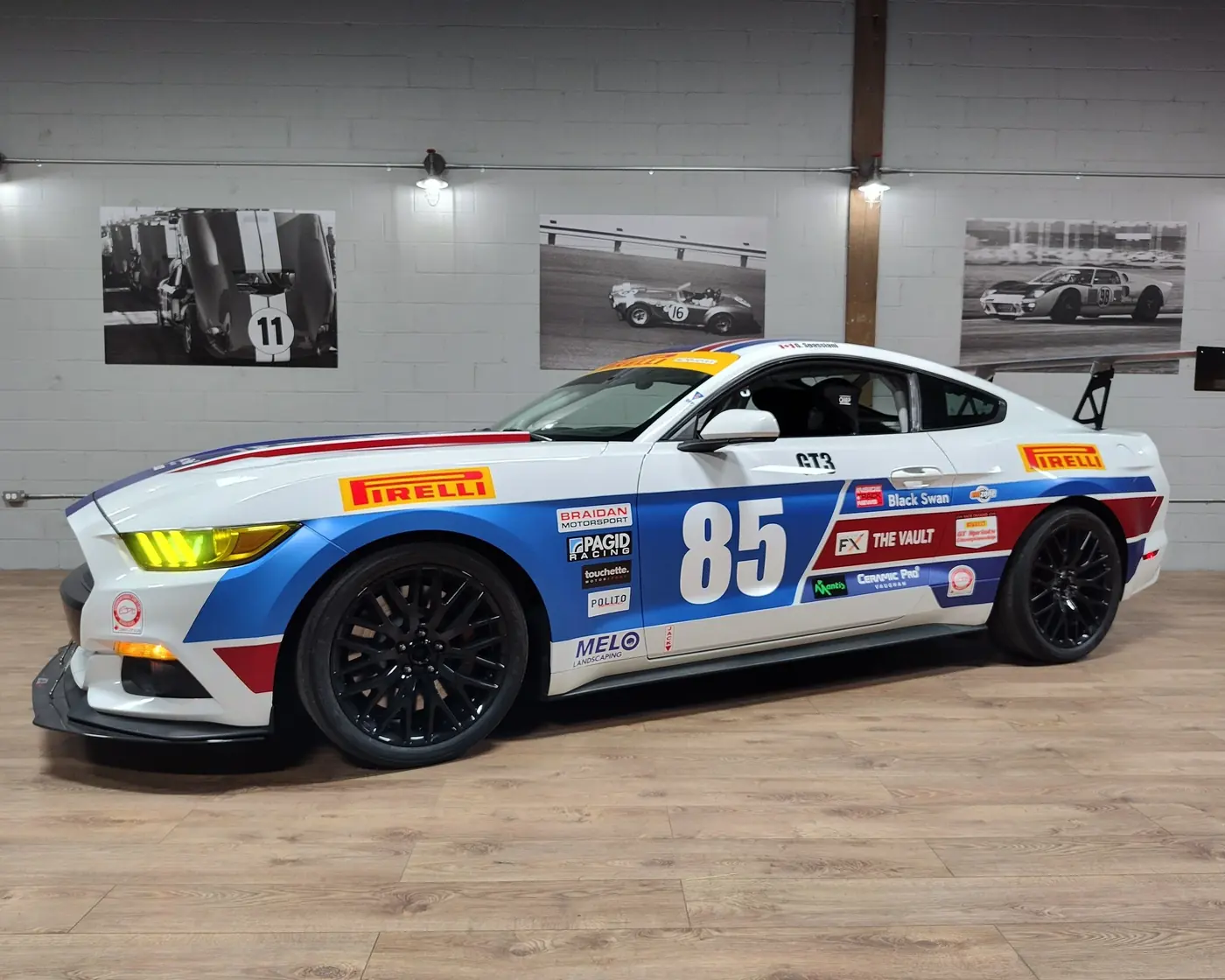
Mustang #85 Build Diary: New Brake Ducts, Old Problems
We melted a caliper at Road Atlanta. Here's what we did about it — and why it's an upgrade.
What actually happened
Late in the Road Atlanta weekend, #85 came in with a soft pedal and a smell nobody enjoys. The caliper piston seals were cooked. Not a catastrophic failure — the car stopped, the driver was fine — but it was the car telling us plainly that we were asking more of the front brakes than we were cooling.
The honest version: this wasn't a surprise part failure. It was a cooling package that was adequate at cooler tracks and marginal at a hot one with a heavy braking zone at the end of a long straight.
Why heavy cars punish brake packages
A Mustang carries more mass into every braking zone than the small cars it races against. Mass has to go somewhere, and it goes into the rotors as heat. Once fluid temperature climbs past its boiling point, you get vapor in the lines and the pedal goes long. Once the rotor face gets far enough past its happy range, pad material starts transferring badly and you get judder that never really goes away.
What we changed
Nothing exotic. Just doing the boring things properly.
- ◆Larger inlet ducts at the front fascia, with real ducting instead of a hose pointed vaguely inward
- ◆Backing-plate deflectors so the air actually reaches the rotor vanes instead of washing past the caliper
- ◆Fresh high-temperature fluid and a strict bleed interval — every event, no exceptions
- ◆A pad compound better suited to sustained heat, accepting slightly worse cold bite
- ◆Rotor temp paint so we can read the answer instead of guessing at it
Why it's an upgrade, not a patch
Cooling the brakes properly doesn't just prevent failures — it makes the car easier to drive. A pedal that feels the same on lap 40 as it did on lap 3 lets a driver commit to the same brake point every time, which is exactly the consistency an endurance result is built on.
That's the part we care about most. Renters aren't paying us for a car that's fast when everything is perfect. They're paying for a car that behaves the same all weekend.
The lesson we'd pass on
If you're building your own car, spend the money on cooling and consumables before you spend it on power. Nobody has ever come off track complaining that their brakes worked too well.